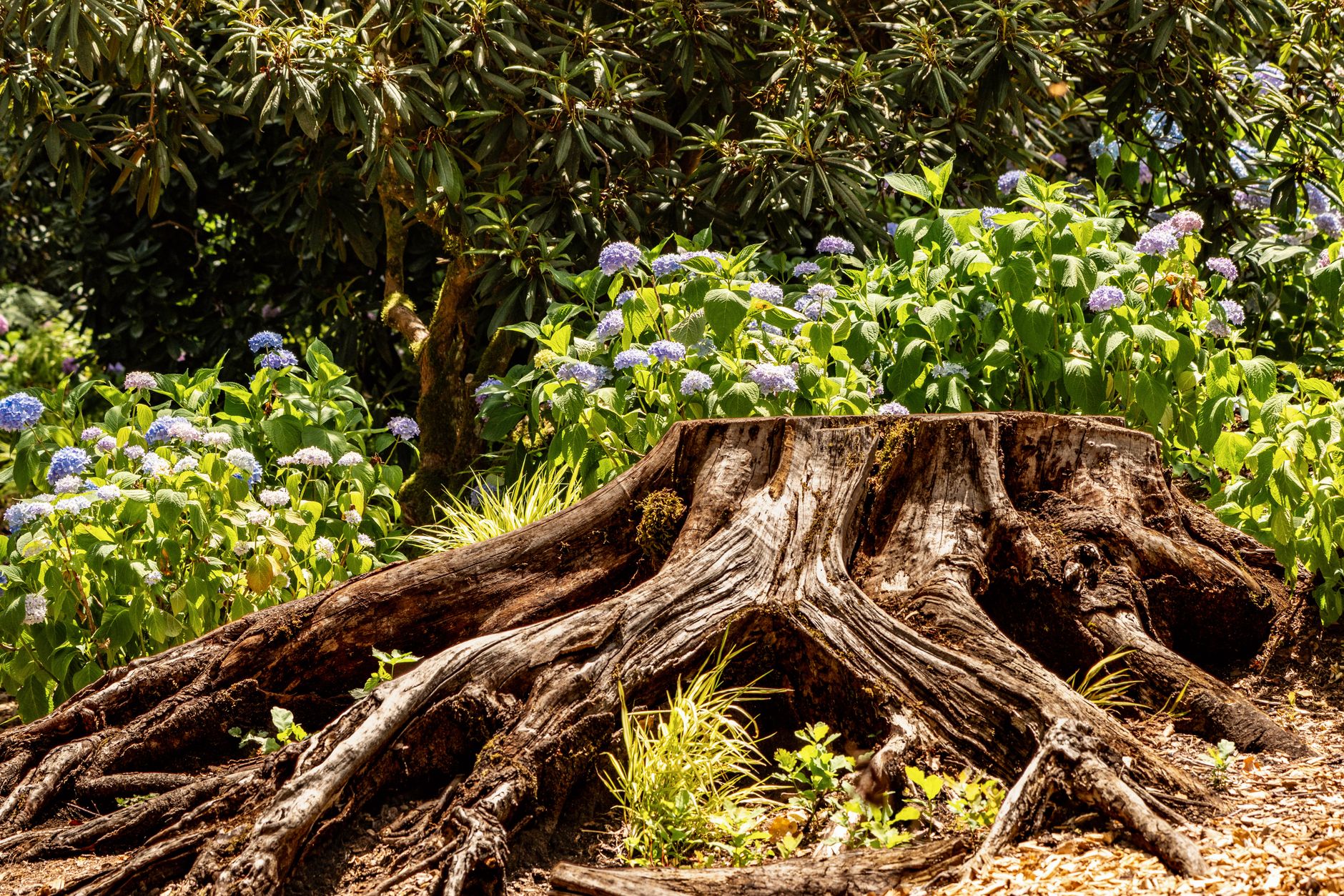
Stump grinding removes the visible stump by chipping it below ground level, but it does not leave a ready-made lawn. The work usually creates a shallow depression filled with wood chips and soil, while larger roots remain underground to break down over time. Knowing what to expect helps you decide whether to restore the spot with grass, make a garden bed, or use the space for another purpose. A little planning now can prevent settling and make the area easier to maintain.
What Grinding Leaves Behind
A grinder cuts the stump into small pieces, usually several inches below the surrounding soil. The exact depth depends on the stump, its location, and what you want to do with the ground afterward. The resulting hole is commonly backfilled with a mixture of wood chips and soil, so the surface may sit lower than the lawn around it.
Grinding does not remove every root. Larger roots can extend well beyond the stump and remain below the surface. They gradually decay, which can cause the ground to settle. You may also see occasional shoots from some tree species, so keep an eye on the spot and remove new growth promptly.
Handle the Wood Chips
The grindings can be useful as mulch around established plants, but fresh chips mixed with soil are not ideal as a direct planting medium. As the wood breaks down, it can temporarily tie up nitrogen near the surface. If you want to reuse the material, spread it as a thin layer around established plants rather than mixing a large amount into a new planting bed.
For a lawn or garden bed, remove excess chips first and set them aside for another use or disposal. Ask your tree service what cleanup is included before work begins; removal of grindings may be separate from grinding. If the chips stay in the hole, top up the area with suitable soil as they settle.
Plan the Ground's Next Use
For grass, clear away loose chips and fill the depression with quality topsoil. Slightly mound the soil above the surrounding grade to allow for settling, then seed or lay sod according to the grass type and season. Keep the area evenly moist while new grass establishes, and avoid heavy foot traffic until it is rooted.
For a planting bed, check that the remaining root zone will not interfere with your chosen plants. Smaller plants with shallow roots are often easier to establish than a new tree planted directly over the old stump. If you plan a patio, pathway, fence post, or other structure, discuss the required grinding depth and nearby roots with the contractor before the work starts.
Expect Settling and Check Utilities
As the buried wood decomposes, the filled area can sink over time. Inspect it periodically and add topsoil when needed, especially before reseeding. Avoid placing a heavy structure over the spot unless the ground has been prepared for that use; ordinary stump grinding does not provide a compacted, engineered base.
Before grinding, identify underground utilities and irrigation lines near the stump. Roots, pipes, and cables may be close together, and the grinder needs room to work. Share known hazards and access limits with the tree service in advance. Sunny Grove Tree Care serves San Diego property owners, and a clear discussion about your plans can help set the right expectations for cleanup and grinding depth.
After stump grinding, the main tasks are managing the chips, refilling the depression, and allowing for gradual settling as roots decay. Decide how you want to use the space before the work begins, then confirm the depth and cleanup plan with your tree service. With a suitable fill and a little follow-up, the area can be ready for its next purpose.